
Only You Can Prevent Budget Burns: How a Cardboard Box in the Wrong Bin Costs Us All
Updated: Oct 5
We’ve all been there. You unbox another delivery, stare at a giant empty Amazon box, and make the executive decision: Do I break this down like an origami master for the biweekly recycling truck, or do I just stomp on it twice, wedge it vertically into the regular trash bin and praise Jah?
Let’s be entirely honest with ourselves for a second. Nobody actually breaks down their boxes. Half the city is convinced recycling is some elaborate hoax run by shadowy municipal wizards, and the other half is just trying to fit two weeks of online shopping into a standard trash can.
Let's get one thing straight: This isn't about hugging trees or saving the planet. This is about saving your hard-earned green—cold, hard cash—from being needlessly incinerated. And right now, we are on a ticking clock.
Why Long Beach Residents Must Act Now
Under our Intermunicipal Waste Disposal Agreement with the Town of Hempstead, our current zero-dollar deal is locked in through December 31, 2029. That means we have a very limited window to stop bleeding cash on trash before future contract terms become an unpredictable wild card.
Every ton of cardboard and paper material we treat like garbage today is an immediate, totally avoidable leak in our municipal budget while our favorable terms are still active.

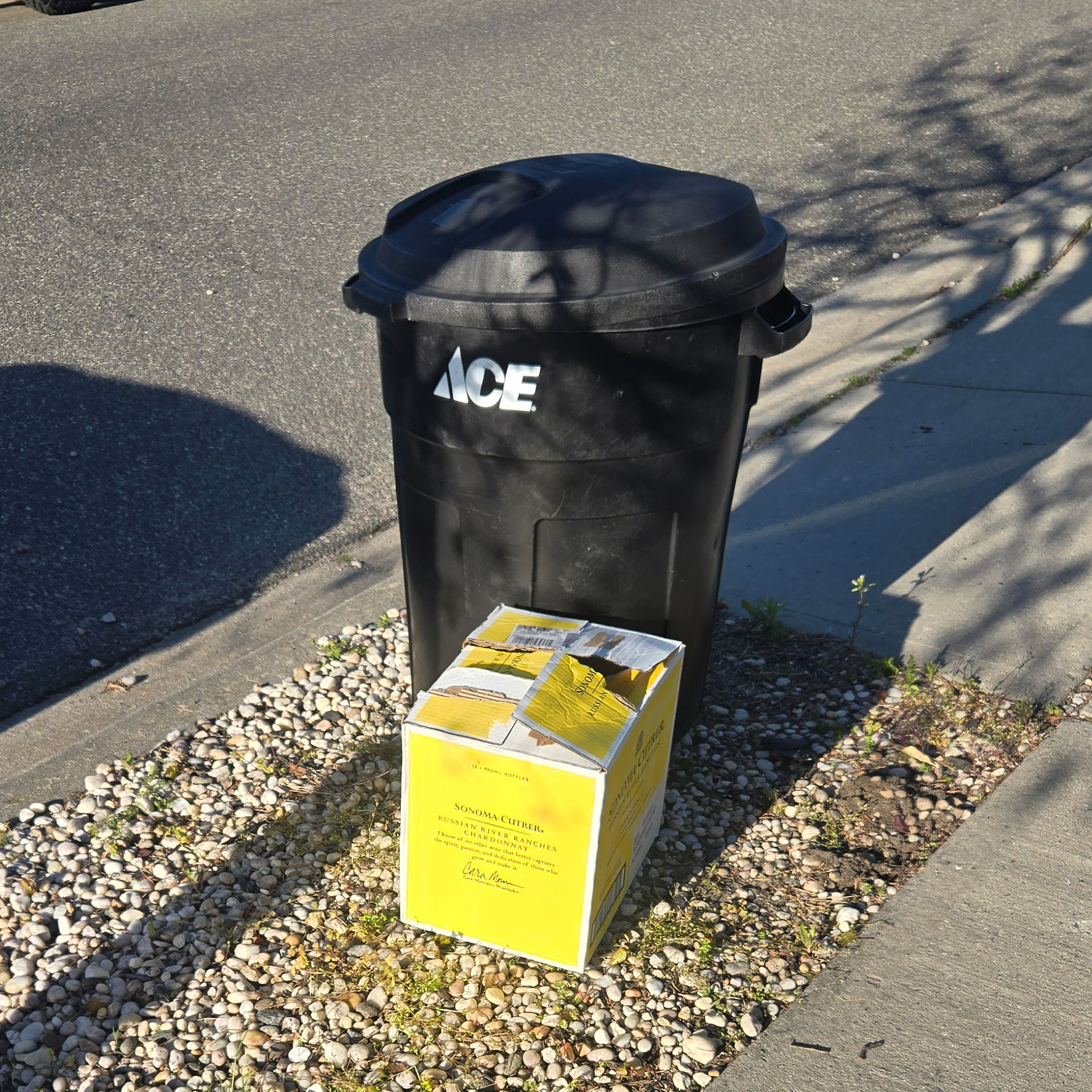


A loop around the block with your dog on the morning of garbage day can be a real eye opener! No, these pictures are not from a paper recycling day...just an average day.
Let’s Look at the Numbers (and Why Today is Likely Worse)
To understand how Long Beach's collective box-stuffing habit impacts our city's bottom line, let's look at the baseline data from the 2024-25 Registered Transfer Facility Annual Report and the NYSDEC 2023 Waste Characterization Study:
The Heavy Toll: In 2024-25, Long Beach sent a staggering 18,413 tons of household garbage to be hauled away. (Standard Municipal Waste from our trash cans)
The Current Price Tag: Apply today’s brutal tipping fee of $94.44 per ton at the transfer station to that baseline tonnage, and you get $1.74 million straight out the door in dumping fees.
The Hidden Mountain: According to the 2023 NYSDEC Waste Characterization study, a massive 15.8% of residential garbage is actually recyclable mixed paper and cardboard.
The Baseline Leak: This data shows the city is spending approximately $275,000 every single year throwing away clean paper and cardboard that we could otherwise dump completely FOR FREE.
The Amazon Effect: That NYSDEC data is from 2023. With the endless avalanche of delivery boxes flooding our doorsteps every single day, and more companies shifting to paper/cardboard packaging, the volume of cardboard entering our waste stream has undoubtedly grown since then. That $275,000 baseline is almost certainly a cute discount compared to the fortune we're burning today.
Let’s Be Real: Recycling is Annoying and Space is Tight
Let’s face it—holding onto cardboard for a biweekly recycling schedule in a dense city like Long Beach is an extreme sport. Not everyone has a garage or side yard to store weeks of packaging, especially when you're already fighting for real estate against a separate bin for plastics.
It is hard, and spatial constraints are a genuine headache. But that's precisely why shifting the needle matters: when we actually manage to force that paper out of the trash and into the right stream, the city has to respond. Better habits today force better infrastructure tomorrow.
The Power Is Already in Your Hands
Smokey the Bear taught generations that protecting things doesn't require a massive government committee; it requires mindfulness from the person holding the tool. Protecting our local tax dollars works the exact same way.
You don’t need a city council vote or a legislative overhaul to fix a $275,000 mistake. You just need a slight attitude adjustment at the curb:
Check the Stream: Remember that clean corrugated cardboard, junk mail, and mixed paper belong in your designated recycling flow—not compressed into the general trash bin.
Beat the Clock: With our disposal agreement running through the end of 2029, every ton we divert keeps cash in our pocket while the framework is still on our side.
Spread the Word: Tell a neighbor. When everyone keeps recyclable paper out of the general waste stream, tonnage drops, tipping penalties shrink, and our collective wallet gets a little heavier.
The infrastructure is there, and the zero-dollar diversion path for mixed paper is wide open. All that’s left is for us to actually use it.
Only you can prevent budget fires. How will you be filling your bin this week?


Comments